
LiveNCTS6 transit declarations are now live — alongside CDS, GB ENS, EU ICS2, GB GVMS and French ELO
Register
Customs software · Machinery & engineering

Customs Declaration Software for Machinery & Engineering

Make the purpose of the movement as clear as the equipment itself. CDUK lets your engineering team prepare and file GB customs declarations in-house, around what the machine is doing next. Export machines to customers, send equipment out for repair or bring tooling in for a project: your team sees each movement, its documents and its status in one place.

  • GB CDS declarations
  • Special-procedure workflows
  • AI document processing
  • Evidence kept with the entry
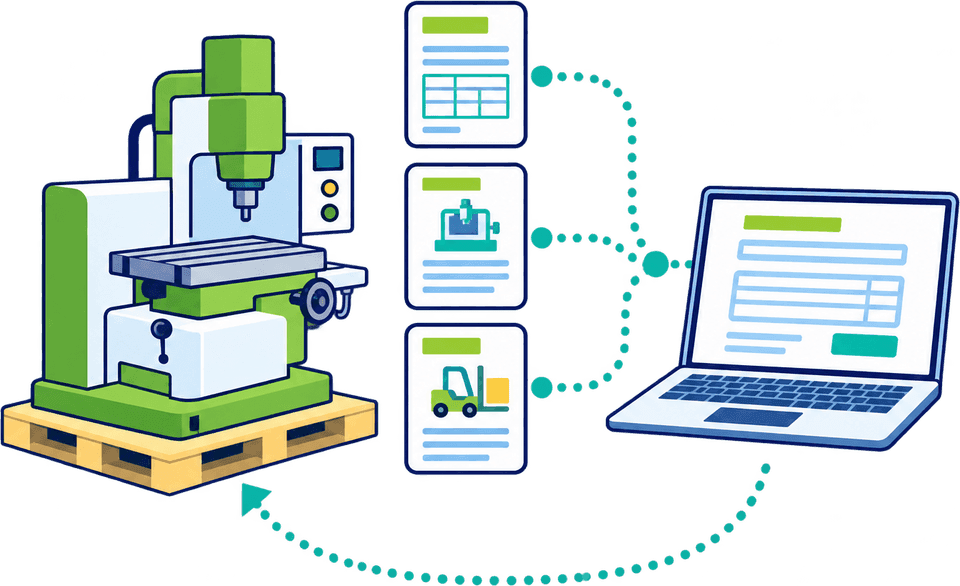
  • Drop in the machine’s documentsInvoice, packing list and specification are read into a draft your team reviews.
  • Review the goods lines and sparesEach line is drafted with its code left masked. Your team confirms classification, origin and value.
  • Check the evidence before you submitTechnical description, serial number and weights are checked, with licence points left to your team.
  • Correct a serial number after acceptanceAmend the accepted declaration with the old and new values shown, and see the amendment accepted.

In a nutshell

A machine can cross a border to be sold, demonstrated, repaired or used temporarily, and it can come back again afterwards. Each of those movements asks different customs questions, so the first job is to establish what the equipment will do next, as well as what it is.

Customs Declarations UK (CDUK) lets your team bring that filing in-house, submitting directly to HMRC’s Customs Declaration Service (CDS). You build each declaration from product information and supporting documents, using AI document processing to turn invoices and packing lists into a reviewable draft.

You have full control of every declaration: you prepare it, check it and submit it directly, with built-in checks and our UK support team behind you. Special-procedure workflows, saved parties and cloned declarations make repeat equipment movements quick, with no monthly fee.

Why engineering shipments are different

The same machine can need a very different entry.

Engineering movements rarely repeat exactly. These are the questions that separate a clean declaration from one that needs rework, and CDUK puts each of them in front of your team while the declaration is still a draft.

  • Purpose changes the question

    A sale, a trade-show demonstration, a repair and a return all involve the same physical equipment but ask for different information, evidence and sometimes a different procedure. Settle the purpose first, then prepare the right declaration in CDUK. Saved templates for each movement type mean the next machine starts from a prepared entry. Bulk upload and multi-item editing handle the long parts lists that come with larger machines.

  • Part numbers are not descriptions

    A commercial part number is a useful reference, but it does not tell a reviewer what the goods are or do. Function, key technical characteristics and how components relate to the machine support a sound classification, and UK Tariff lookup helps you reach it. Your team decides the code, and the audit trail records the reasoning.

  • Projects ship in pieces

    A single purchase contract can produce multiple consignments over weeks. Each gets its own declaration and its own check. Clone the previous one, adjust what changed, and see every shipment of the project in one place.

  • Evidence has to travel with the goods

    Invoices, specifications, authorisation references and records of earlier movements all matter. Attaching them to the declaration keeps everything together, and the audit trail shows any later reviewer exactly what was filed and why.

  • Conditions follow special procedures

    Temporary use, repair and processing movements carry conditions and ongoing obligations. Equipment arriving for repair is a different movement from a temporary demonstration import, and each has its own declaration workflow in CDUK. Your team prepares either in the same account, with notifications of customs responses arriving where it can act on them.

  • Other controls sit outside customs

    Export licensing, product and destination screening and technical regulation run alongside the declaration. CDUK keeps clean product, party and document records, so those checks start from the same facts you declare.

Start with the movement

Start with what the equipment will do next.

Use the movement purpose as the first column of your preparation. It decides which facts you need to establish and which records to collect before you open a declaration.

MovementInformation to establishEvidence to gatherEasy to overlook
Sale or permanent importSpecification, value, origin and applicable treatmentCommercial invoice, technical specification, supplier origin statementsSpare parts or accessories invoiced alongside the main machine
Demonstration or temporary useIntended use, return plan and procedure eligibilityEvent or customer details, return arrangements, any authorisation referencesAssuming temporary status before the conditions are checked
Repair or processingWork to be undertaken and the relevant authorisation or procedureRepair order or work description, authorisation references, serial detailsTreating a repair movement as a temporary demonstration
Return after exportOriginal movement evidence and current conditionOriginal export record, proof of the earlier movement, notes on any work done abroadCondition or value having changed since the goods left

Special procedures carry conditions, and eligibility depends on your facts and any authorisations you hold. You choose the procedure, and CDUK guides the declaration around it.

Illustrative example

One document bundle, one reviewed declaration.

Gather the commercial invoice, the technical specification and the evidence of any previous movement before you prepare. The snapshot shows how the bundle sits alongside the open questions your reviewer still has to answer.

Example bundle

Documents and decisions, kept apart.

AI document processing extracts commercial information such as parties, values, quantities and weights from invoices, packing lists and transport documents, and prepares a draft for your team to review. There is no per-document fee.

The details documents alone cannot settle, such as the movement purpose and the customs procedure, are completed by your team once the facts are established. No procedure or relief is selected for you, so the declaration always reflects your decision. Everything is held in your account for review at any time.

  • Invoice and packing data extracted into a draft you review and correct
  • Technical specification and earlier movement records attached as supporting evidence
  • Purpose, procedure and authorisation references completed by your team before filing
Who does what

Your filing, your controls, side by side.

CDUK covers the customs filing task end to end, from document extraction to submission. The wider obligations around engineering goods run alongside it, and the records you keep in CDUK make each of them easier to evidence.

In CDUK

The customs declaration workflow

Prepared, checked and submitted by your team, with review before every submission. Roles and workflow let you split preparation and sign-off, and every step is visible in the audit trail.

  • GB CDS import and export declarations, including special-procedure declaration workflows
  • Extraction of commercial information from supported documents, with conflicts surfaced for you to resolve
  • Shared item information applied across selected goods lines, with differences kept where they matter
  • Supporting documents attached against each declaration
  • Saved parties and cloned declarations to shorten repeat work
Elsewhere

Runs alongside your filing

Obligations that sit next to the declaration and draw on the same records. Product, party and document detail held in CDUK saves re-keying it for each process.

  • Procedure eligibility, and the authorisations and later obligations that come with it
  • Export licensing, product screening and destination checks
  • ATA carnets are not issued by CDUK. Tell us your chosen procedure and we will fit the declaration workflow
  • Technical, safety and product regulation of the equipment
  • Inventory and record keeping required by your procedure
How to start

From a representative movement to a repeatable process.

The quickest way to see how CDUK fits is to work through a real movement. Start with one shipment, then turn it into a template for every similar equipment movement. Our UK team provides onboarding and training.

  1. Step 1: Pick a representative movement

    Choose one machine or project shipment, ideally one with a purpose beyond a straight sale, so the harder questions surface early.

  2. Step 2: Assemble the bundle

    Collect the invoice, specification and any earlier movement evidence. We show how IDP turns these documents into a draft your team can review and correct, with no per-document fee.

  3. Step 3: Prepare and review

    Complete the details documents cannot settle, set the purpose and procedure, and check each line with real-time validation before you submit. Nothing leaves your account until you are happy with it.

  4. Step 4: Plan the rollout

    Agree who prepares, who reviews and who submits, then register and start with onboarding and training from our team. See pricing: pay as you go, no monthly fee. Teams that file often can ask about a subscription with volume discounts.

Frequently Asked Questions

Questions from engineering businesses.

Can CDUK support special-procedure entries?

Yes. CDUK supports CDS special-procedure declaration workflows, so your team can prepare them in the same account as your standard entries. You bring the authorisation and procedure decision, and we guide the declaration around it. Our GB CDS service page describes the declaration side.

Does CDUK issue ATA carnets?

No, CDUK does not issue carnets. If your movement relies on a carnet or another arrangement, tell us the chosen procedure and we will show how the declaration workflow fits it.

Will customs acceptance satisfy export controls?

No. Export licensing and destination checks run alongside your declaration, as a separate step. CDUK gives you clean, consistent product and party records and a full audit trail to support that process.

Should repair equipment be handled like a temporary demonstration import?

No. Repair or processing movements involve the work to be done and the relevant authorisation or procedure, which differ from temporary use. Set the purpose first, then prepare the matching declaration in CDUK, where each movement type has its own workflow. Our team backs you up with onboarding and support.

Can one purchase contract go on a single declaration?

No. Usually each consignment is declared on its own. If a project ships in multiple consignments, prepare one declaration per shipment by cloning the previous one and adjusting what changed. You can then follow the whole project in a single account.

How does document processing help with technical goods?

AI document processing extracts commercial information from invoices, packing lists and transport documents and prepares a draft for your team to review, with no per-document fee. Your team adds the technical meaning, such as how components relate, and keeps full control of the final declaration.

Does a commercial part number identify the goods for classification?

No, not on its own. A part number is a helpful reference, but classification depends on what the goods are and do. Record function and key technical characteristics, and use UK Tariff lookup in CDUK to guide the code. Your team decides, and the audit trail keeps the reasoning with the declaration. See our guide to exporting industrial machinery for wider context.

Work Through the Movement Before Dispatch

Bring a real equipment shipment and we will walk through the purpose, the documents and the declaration with you, so you can see in-house filing on your own goods. Our UK team provides onboarding and training. Pay as you go with no monthly fee and no minimum volume, or ask about a subscription with volume discounts.