HMRC and HM Treasury have jointly published a call for evidence on the future of the UK customs regime, inviting views from traders, intermediaries, freight forwarders, hauliers, and customs software providers. Published on 23 June 2026 and running for twelve weeks until 15 September 2026, the call for evidence seeks views on how trade digitalisation and modernised trading practices are reshaping the way businesses interact with UK customs. This is one of the most consequential policy consultations the customs sector has seen since Brexit, and every business involved in UK cross-border trade should take note.
Why This Matters Now
The UK customs regime has been through significant change since EU exit, and the foundations of an independent system are now firmly in place. The Customs Declaration Service cleared over 91 million customs declarations into and out of the UK in 2025 — a number that underlines the scale of the system and the importance of getting its evolution right. With that foundation established, the government’s attention is turning to what comes next.
Technological change and digital trade processes offer opportunities to reduce costs, complexity, and administrative burdens for businesses trading across the UK border. The government has set out an ambition to modernise the state and harness the potential of digital technology, developing a customs regime that is resilient, modern, and responsive to evolving technology and trading practices.
The timing is deliberate. Across the globe, customs authorities are re-examining how they collect and use trade data. The EU Customs Union reforms set out plans to replace traditional declarations with data flowing directly from digitalised trade systems and to develop more advanced, AI-enabled risking systems. The US is pursuing similar goals around interoperability and trusted data sharing. The UK’s call for evidence positions the government to shape its own path in this international current — and to hear directly from those on the ground about where the friction points lie.
The Three Themes Under Scrutiny
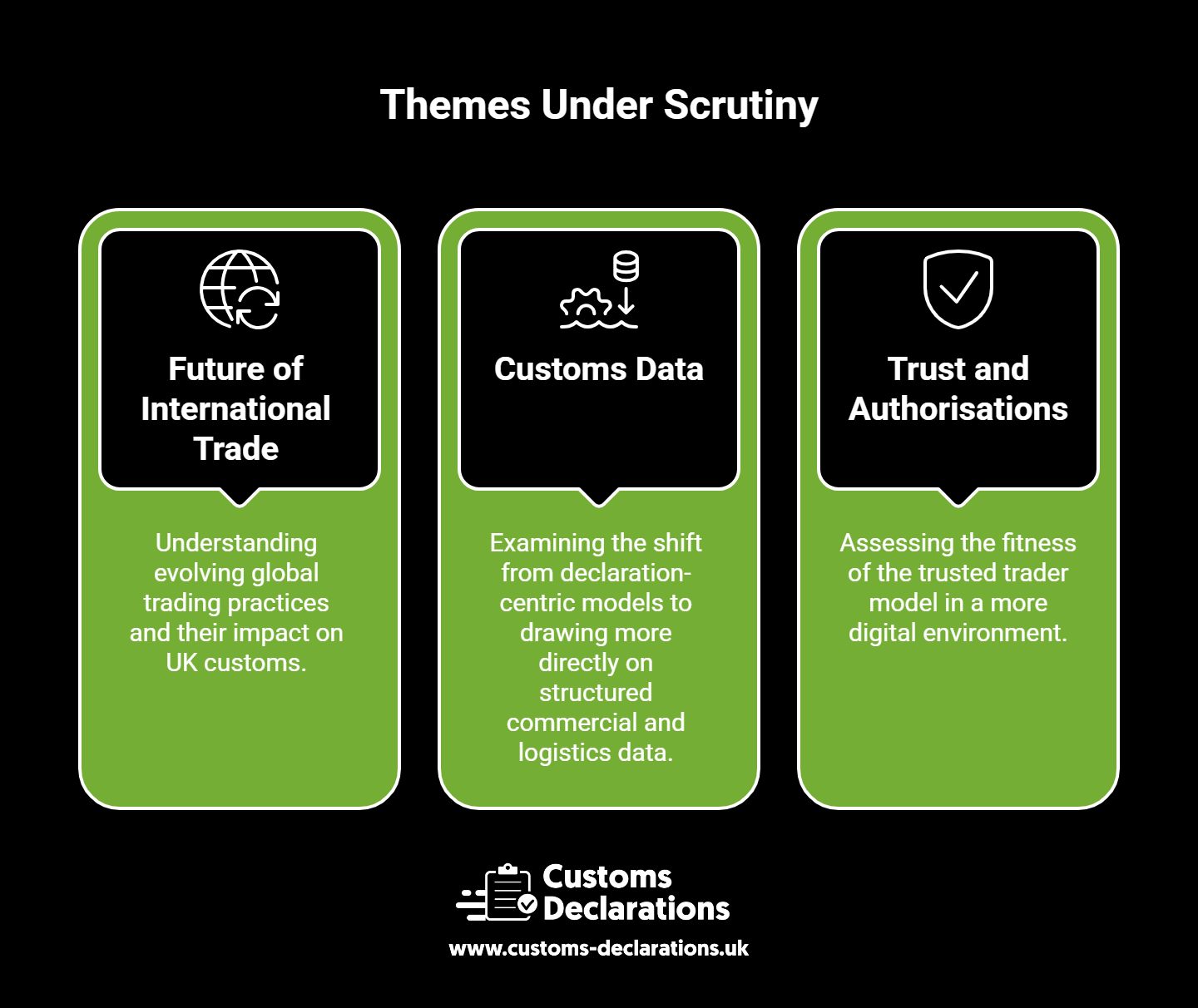
The call for evidence is structured around three substantive areas, each of which will be familiar to anyone filing declarations or supporting traders who do.
The first is the future of international trade itself. The government wants to understand how global trading practices are evolving and how this impacts the way businesses interact with the UK customs regime, including how well the regime currently supports the use of digital trade processes and where it may restrict or lag behind those processes. Questions explore anticipated changes in trade volumes, supply chain complexity, and expansion into new markets over the next decade.
The second theme is customs data — arguably the most technically significant of the three. The current model mainly relies on information being submitted through customs declarations at a particular point in the movement of goods. Previous UK border technology pilots showed that most customs risking data requirements can be met from Electronic Trade Documents and other supply chain data from digital trade systems. This opens the question of whether the declaration-centric model should evolve toward one that draws more directly on structured commercial and logistics data as it flows through supply chains. The UK’s Electronic Trade Documents Act in 2023 granted electronic trade documents the same legal status as physical documents, estimated to deliver a net benefit of around £1.14 billion to the British economy over a decade from reduced administrative costs for businesses.
The third theme is trust and authorisations. The government’s trusted trader model — encompassing Authorised Economic Operator status, Duty Deferment Accounts, Inward Processing, and the full suite of customs authorisations — is being examined for fitness in a more digital environment. The UK takes a flexible and decentralised approach, giving traders choice over which authorisations best fit their needs rather than mandating a universal baseline. The call for evidence asks whether this model continues to work well as trade becomes more digital, and whether faster, simplified, or more tailored authorisation processes should be introduced.
What Is Being Asked of Intermediaries and Software Providers
The call for evidence explicitly addresses those who build and operate the tools through which declarations are submitted. Customs intermediaries complete the vast majority of customs declarations on behalf of traders, and the government is interested in how trade digitalisation is affecting the intermediary sector, how intermediaries’ roles may change, and how the customs system can continue to support a professional, capable, and trusted intermediary market.
For software providers specifically, the questions go to the heart of how platforms integrate with trader workflows. Are current data formats and submission processes well aligned with how businesses actually manage and share trade data? Would greater use of supply chain data change the way these organisations operate? And are they already developing solutions to support new approaches to customs data sharing? These are direct questions that the government wants answered on the record.
The Role of AI and Digitalisation
The call for evidence references a widening set of government initiatives that signal the direction of travel. HMRC has begun an ambitious programme to improve the Online Trade Tariff service using AI tools. The government has also announced pilots to test how digital trade data and documents could be used in HMRC systems, and how data exchange and digital verifiable credentials could be used to build greater trust — including one delivered jointly with US Customs and Border Protection.
Supply chain traceability is another thread running through the document. From 2027, the EU will begin introducing Digital Product Passports for certain product categories using standardised, machine-readable data formats. The United Nations is also developing a digital framework to support trusted and interoperable data sharing and sustainability information across global supply chains. The UK’s call for evidence asks traders and intermediaries how these international developments are affecting their operations and what role the UK should play — whether charting its own course or aligning with emerging international frameworks.
A Parallel Consultation to Note
Respondents should be aware that this call for evidence sits alongside a related process. A separate Consultation on the Introduction of Mandatory Registration for Customs Intermediaries is running concurrently, seeking views on new mandatory registration requirements for customs intermediaries who submit declarations on behalf of traders. Businesses that use intermediaries or operate as intermediaries will want to engage with both.
How to Respond — and Why You Should
Responses should be submitted by 15 September 2026, preferably via the online form at SmartSurvey. The government will aim to publish a summary of responses within twelve weeks of the call for evidence closing, and the evidence submitted will be considered as part of the customs policymaking process and may lead to further consultation.
A webinar is also scheduled: HMRC and HM Treasury will hold a webinar on 1 July 2026 to present the call for evidence, its aims, and how to respond, with an opportunity to ask questions.
Participation matters. The questions being asked — about data models, interoperability, AI use cases, and the future role of declarations — are not abstract. They will shape the architecture of the regime that traders, brokers, and software platforms operate within for the next decade. Businesses with practical experience of where the current system creates friction, and where digital processes could flow more freely, are precisely the voices the government says it needs to hear.
At Customs Declarations UK, we support hundreds of businesses navigating the current regime every day through our import and export declaration platform and ENS safety and security service. We will be engaging with this call for evidence and encourage our customers and partners to do the same. The future of UK customs digitalisation is being shaped now — this is the moment to have your say.