The regulatory framework governing trade in the United Kingdom is in a state of constant evolution. For customs agents, freight forwarders, and logistics providers, staying ahead of these changes is not just a matter of professional diligence—it is a critical operational necessity. On 1 April 2026, the Customs (Tariff and Miscellaneous Amendments) (No. 2) Regulations 2026 officially came into force, introducing a series of high-impact changes to the customs UK landscape.
These regulations modify the UK Global Tariff and preferential trade arrangements, impacting everything from high-tech offshore wind manufacturing to agricultural imports from Ukraine. As an industry professional, understanding the nuances of these amendments is vital for ensuring accurate declarations, avoiding costly delays, and maximizing the duty-saving opportunities available to your clients.
Key Regulatory Changes: A Closer Look
The No. 2 Regulations of 2026 are multifaceted, primarily focusing on updating preferential tariff rates and introducing targeted duty reliefs to support the UK’s strategic industrial goals.
1. Updated Preferential Tariffs: Japan, Iceland, and Norway
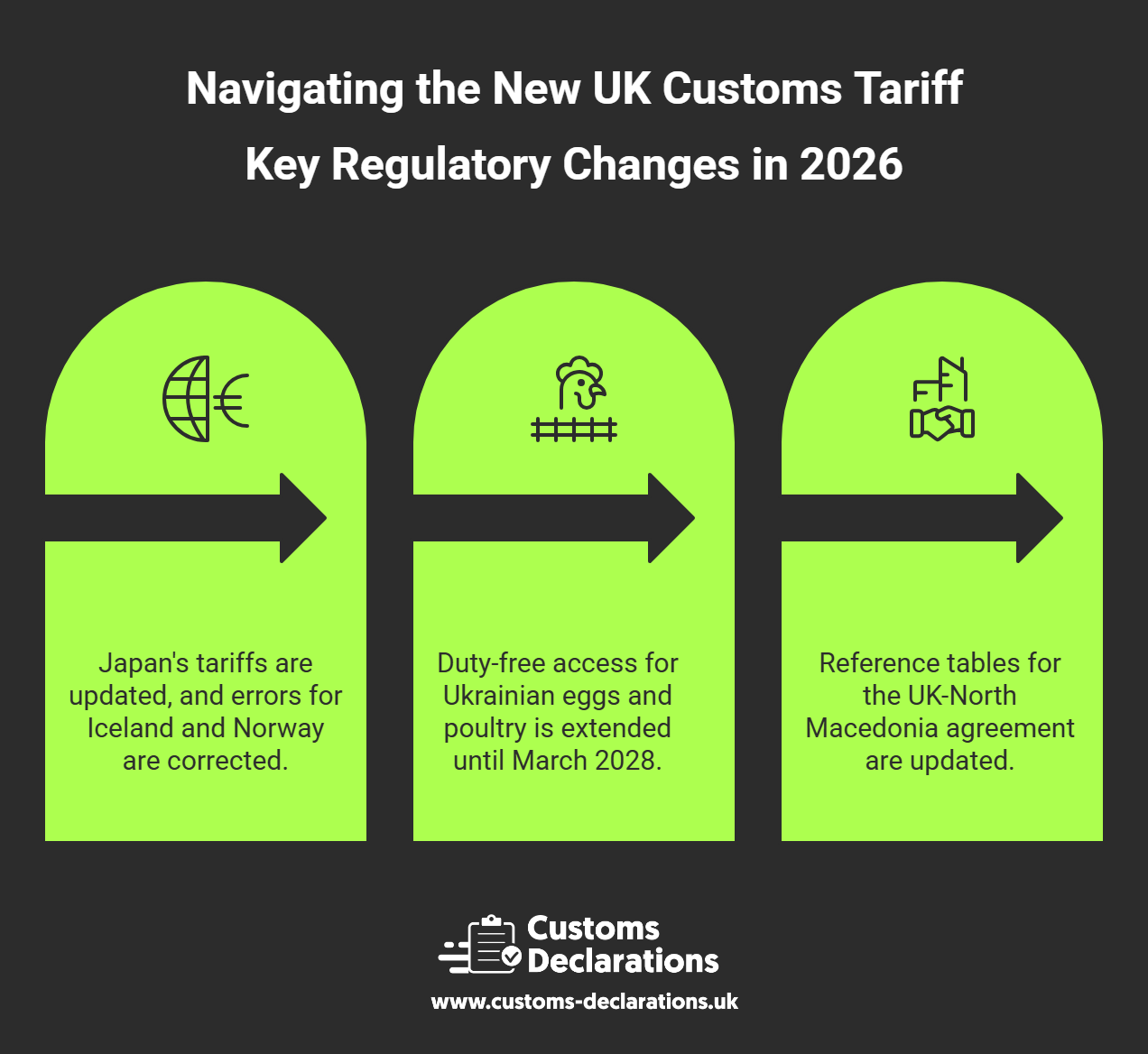
The UK-Japan Comprehensive Economic Partnership Agreement (CEPA) continues its staged implementation. From 1 April 2026, Japan (2026 rates) are now in effect. This requires importers to reference the most current “Japan Preferential Tariff Reference Document” to ensure they are applying the correct staged duty reductions.
Simultaneously, the regulations have addressed historical technical errors in the preferential documents for Iceland and Norway. While these may seem like minor clerical adjustments, for high-volume traders, these “corrections” can alter the fiscal outcome of a declaration. Ensuring you are using the updated origin reference documents is now a mandatory requirement for any preference claim.
2. Ukraine: Extended Liberalisation for Eggs and Poultry
The UK’s commitment to supporting Ukraine’s economic resilience remains steadfast. Under the new regulations, the temporary liberalisation (duty-free and quota-free access) for Ukrainian egg and poultry imports has been extended until 31 March 2028.
This is a specific carve-out from the broader five-year extension granted to other Ukrainian goods. For customs professionals handling food logistics, this provides a clear two-year horizon of duty-free trade, though it remains vital to monitor the potential for safeguard measures should import volumes cause significant domestic market disruption.
3. North Macedonia Partnership
The regulations also update the reference tables for the UK-North Macedonia Partnership, Trade and Cooperation Agreement. As global trade routes shift, maintaining compliance with these specific bilateral agreements ensures that goods originating from North Macedonia continue to benefit from the intended preferential treatment without administrative friction at the border.
Supporting the “Clean Energy Superpower”: New Authorised Use Measures
Perhaps the most significant addition in the 2026 regulations is the introduction of new Authorised Use measures aimed specifically at the offshore wind sector. The UK government has identified offshore wind as a pillar of energy security, and these tariff changes are designed to lower the cost of manufacturing.
What is Authorised Use?
The Authorised Use procedure allows goods to be imported at a reduced or zero rate of duty, provided they are used for a specific purpose—in this case, the manufacture of offshore wind turbines.
Eligible Goods and Systems
The new measures focus on critical infrastructure components that were previously subject to standard UK Global Tariff rates. These include:
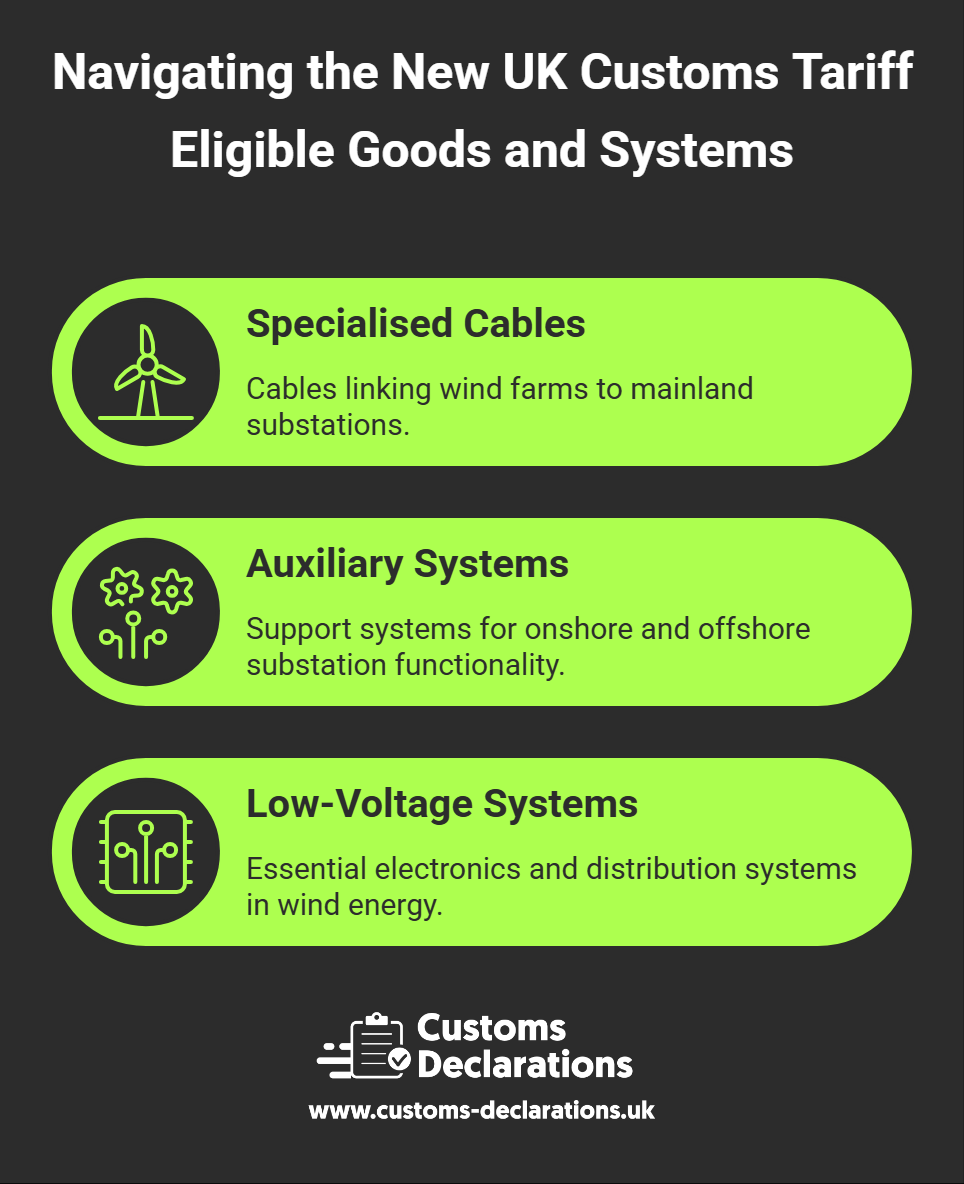
- Specialised Cables: Specifically those linking wind farms to mainland substations.
- Auxiliary Systems: Support systems required for both onshore and offshore substation functionality.
- Low-Voltage Systems: Essential electronics and distribution systems incorporated into the wind energy production chain.
For customs UK declarants, this means that if an importer can demonstrate that these components are destined for the manufacture of wind turbines, the duty can be conditionally reduced to zero. This represents a significant saving for manufacturers but places an increased burden of proof on the agent to ensure the “Authorised Use” criteria are met and documented correctly.
Impact on Customs Agents and Declarants
The transition to these 2026 regulations is not an automatic “set and forget” update. It requires active intervention in the declaration process.
Origin Reference Documents
One of the most common pitfalls in customs compliance is the use of outdated reference documents. The 2026 regulations explicitly state that importers using preference claims must use the updated origin reference documents. An outdated document can lead to a rejected claim, resulting in the application of the full UK Global Tariff and potential penalties for misdeclaration.
Monitoring “Staged” Rates
As seen with the Japan agreement, tariff rates are rarely static. They often “stage” down over several years. On 1 April each year, agents must update their internal databases to reflect these shifts. For April 2026, the Japan 2026 rates are the new baseline.
Customs Declaration UK: Seamless Compliance Across All Borders
Navigating the intricacies of customs UK regulations—whether it’s the 2026 Tariff amendments or the complex requirements for Authorised Use—requires a partner who understands the technology as well as the law.
At Customs Declaration UK, we offer an easy, seamless, and comprehensive declaration service that covers all modes of transport: road, rail, air, and sea. Our platform is designed to handle the heavy lifting of regulatory updates for you:
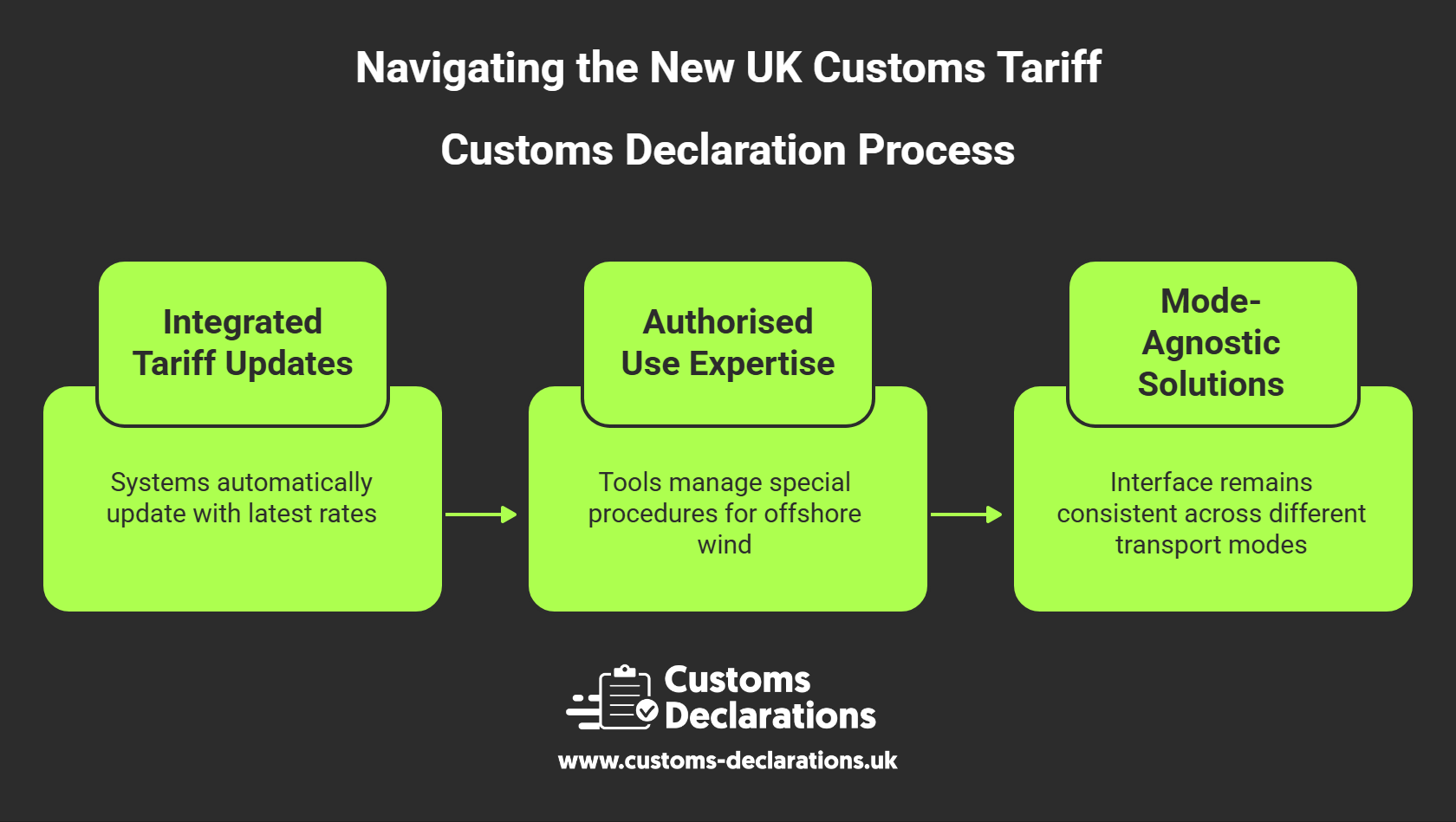
- Integrated Tariff Updates: Our systems are automatically updated with the latest Japan 2026 rates and Ukraine liberalisation rules, so you don’t have to manually track document versions.
- Authorised Use Expertise: We provide the digital tools needed to manage complex special procedures for the offshore wind sector, ensuring your data meets the strict burden of proof required by HMRC.
- Mode-Agnostic Solutions: Whether you’re importing poultry by road from Ukraine or cables by sea for a wind farm, our interface remains consistent and user-friendly, reducing training time and error rates.
Conclusion
The Customs (Tariff and Miscellaneous Amendments) (No. 2) Regulations 2026 represent a significant step in the UK’s trade strategy. By balancing domestic industrial support with international commitments, the UK has created a complex but rewarding tariff landscape.
Success in this environment depends on accuracy and adaptability. By partnering with CustomsDeclarations.UK, you ensure that every customs UK filing is backed by a platform that evolves alongside the law. We turn regulatory hurdles into streamlined workflows, ensuring your goods move across borders without friction, regardless of the mode of transport. With the right technology and the right experts, the April 2026 changes are simply another opportunity to demonstrate excellence in global logistics.