Digital Co-Pilots for Logistics: Augmenting Human Expertise
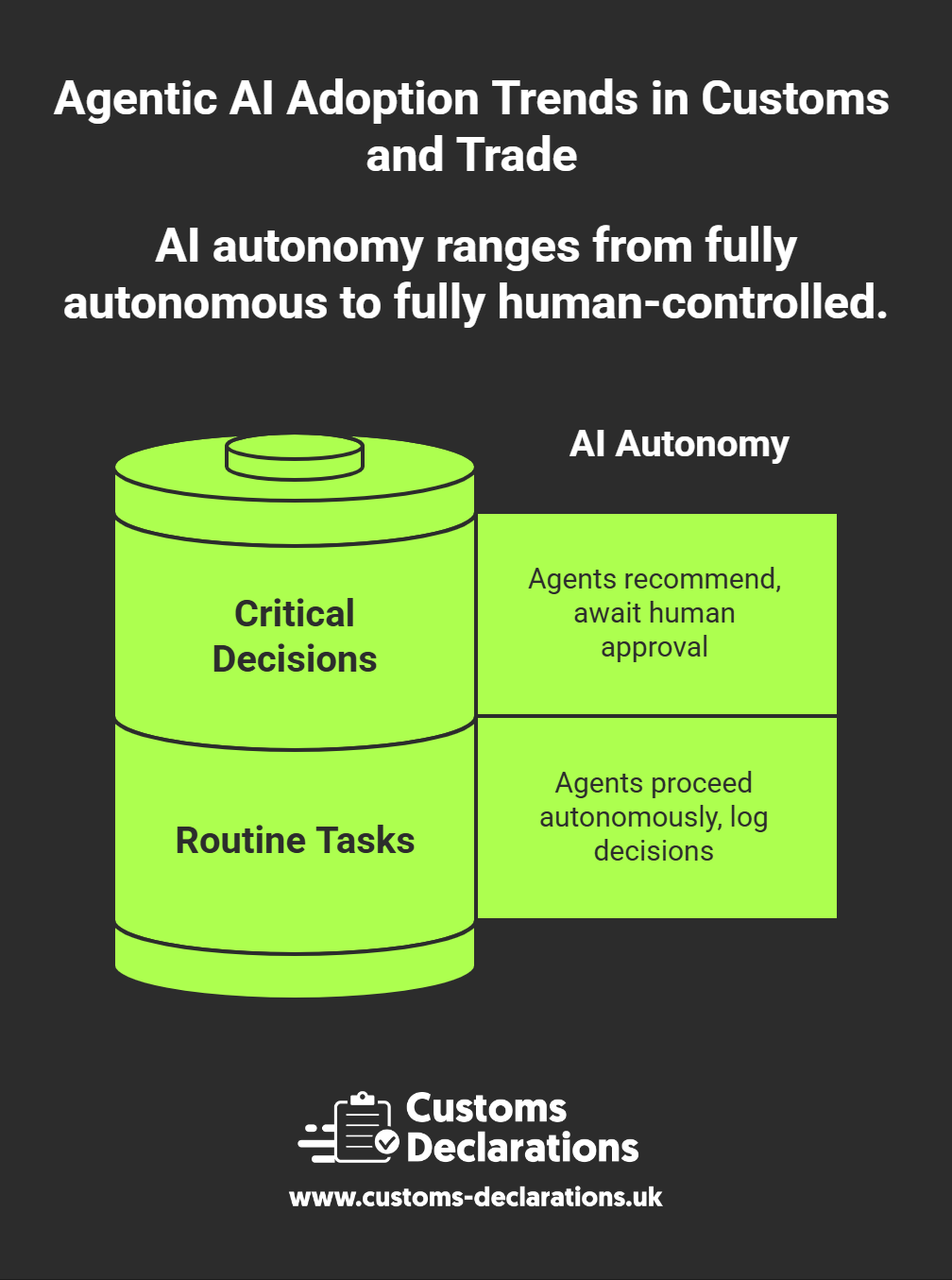
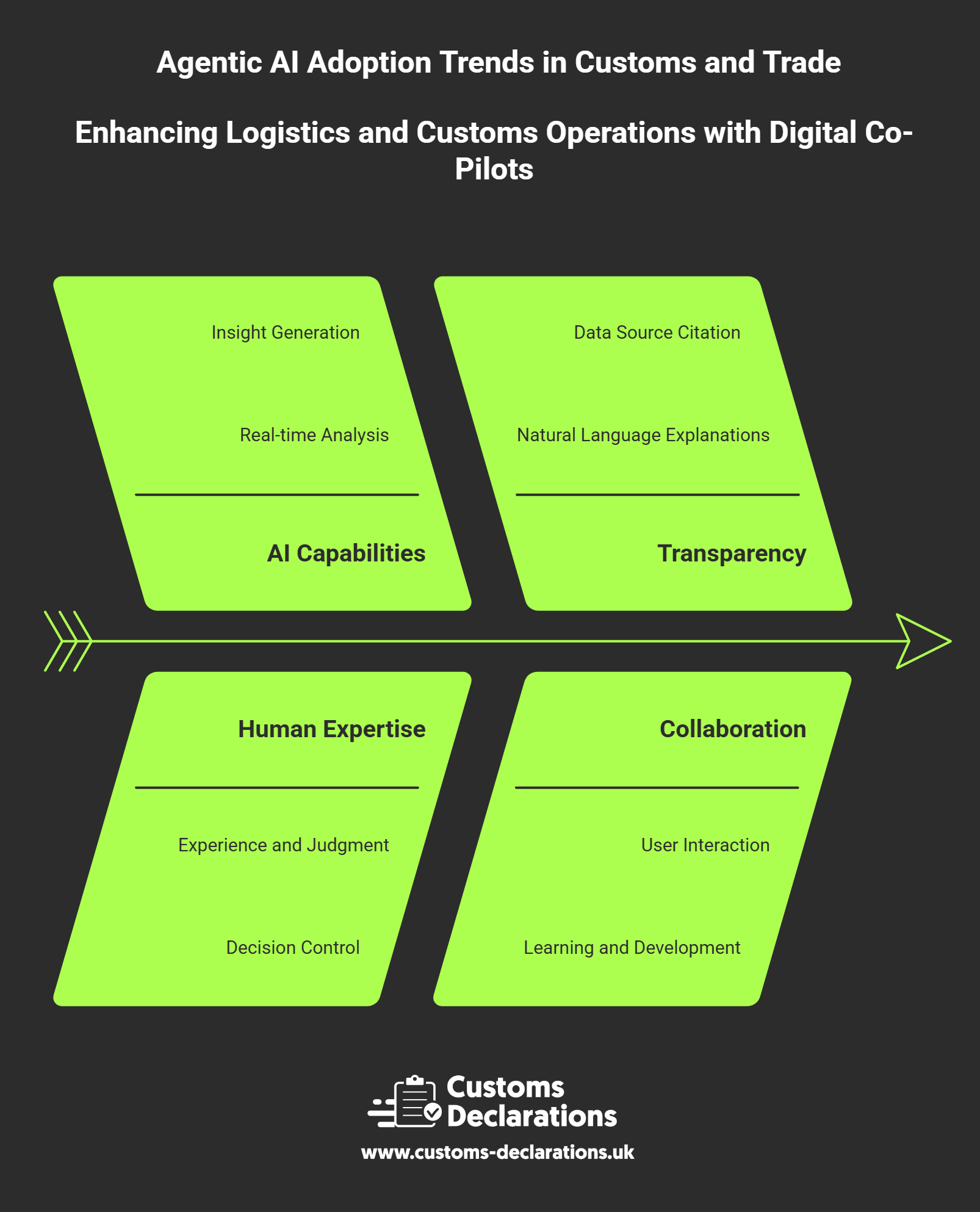
Not every AI deployment aims for full autonomy. In many contexts, the highest value emerges when AI systems augment human decision-making rather than replace it. Digital co-pilot systems embody this philosophy, functioning as intelligent assistants that enhance human expertise, accelerate analysis, and surface insights that would otherwise remain hidden. In logistics and customs operations, where experience and judgment are invaluable but data volumes and complexity overwhelm manual analysis, co-pilots represent a pragmatic and immediately actionable adoption path for agentic AI.
A digital co-pilot operates as a trusted advisor embedded in the user’s workflow. When a customs broker prepares an import declaration, the co-pilot reviews the draft entry in real time, highlighting potential issues such as commodity code mismatches, missing supporting documents, or valuation inconsistencies. It suggests corrections based on historical patterns, regulatory guidance, and peer benchmarks, but the broker retains full control over the final submission. When a logistics manager evaluates carrier options for a time-sensitive shipment, the co-pilot retrieves performance data for each carrier on the relevant lane, models transit time distributions, estimates delay risks based on current port congestion, and presents a ranked recommendation with transparent trade-offs between cost, speed, and reliability.
Unlike fully autonomous agents that execute decisions independently, co-pilots prioritize transparency and collaboration. They explain their reasoning in natural language, cite the data sources and models used, and invite users to challenge or refine their recommendations. This explanatory capability builds trust and accelerates learning; users not only receive actionable guidance but also develop deeper understanding of the underlying logic, making them more effective decision-makers over time.
Co-pilots excel in scenarios requiring nuanced judgment, contextual knowledge, or stakeholder negotiation. For example, when a shipment encounters an unexpected customs hold, a co-pilot can synthesize the relevant regulations, retrieve similar cases and their resolutions, draft a response to the customs authority incorporating applicable legal arguments, and suggest escalation paths if initial appeals fail. The human officer reviews the draft, adds context that only direct experience provides, and finalizes the communication. The co-pilot accelerates the process and ensures consistency with best practices, while the officer’s expertise ensures the response is appropriately tailored and strategically sound.
In complex multi-party negotiations—such as coordinating a cross-border shipment involving a shipper, freight forwarder, customs broker, and multiple carriers—co-pilots can manage coordination overhead by tracking commitments, flagging conflicts, and suggesting resolution options. They might detect that a proposed routing change conflicts with an existing customs bond limitation and recommend alternative solutions that satisfy all constraints. By handling the cognitive load of coordination and data synthesis, co-pilots free human participants to focus on relationship management, creative problem-solving, and strategic alignment.
The co-pilot model also addresses workforce development challenges. As experienced customs professionals retire, their tacit knowledge risks being lost. Digital co-pilots codify this expertise into accessible, interactive systems that guide less experienced staff through complex scenarios, reducing onboarding time and improving consistency. Over time, co-pilots learn from user interactions, adapting their recommendations to reflect organizational preferences and domain-specific insights that emerge from practice.
For organizations hesitant to cede full control to autonomous agents, co-pilots offer a lower-risk entry point into agentic AI. They deliver immediate productivity gains, build user confidence in AI capabilities, and generate operational data that can inform future investments in greater autonomy. In customs and logistics, where human judgment remains essential but augmentation is desperately needed, digital co-pilots represent the optimal balance between innovation and pragmatism.