Claiming Preference: A New Process for UK Exporters
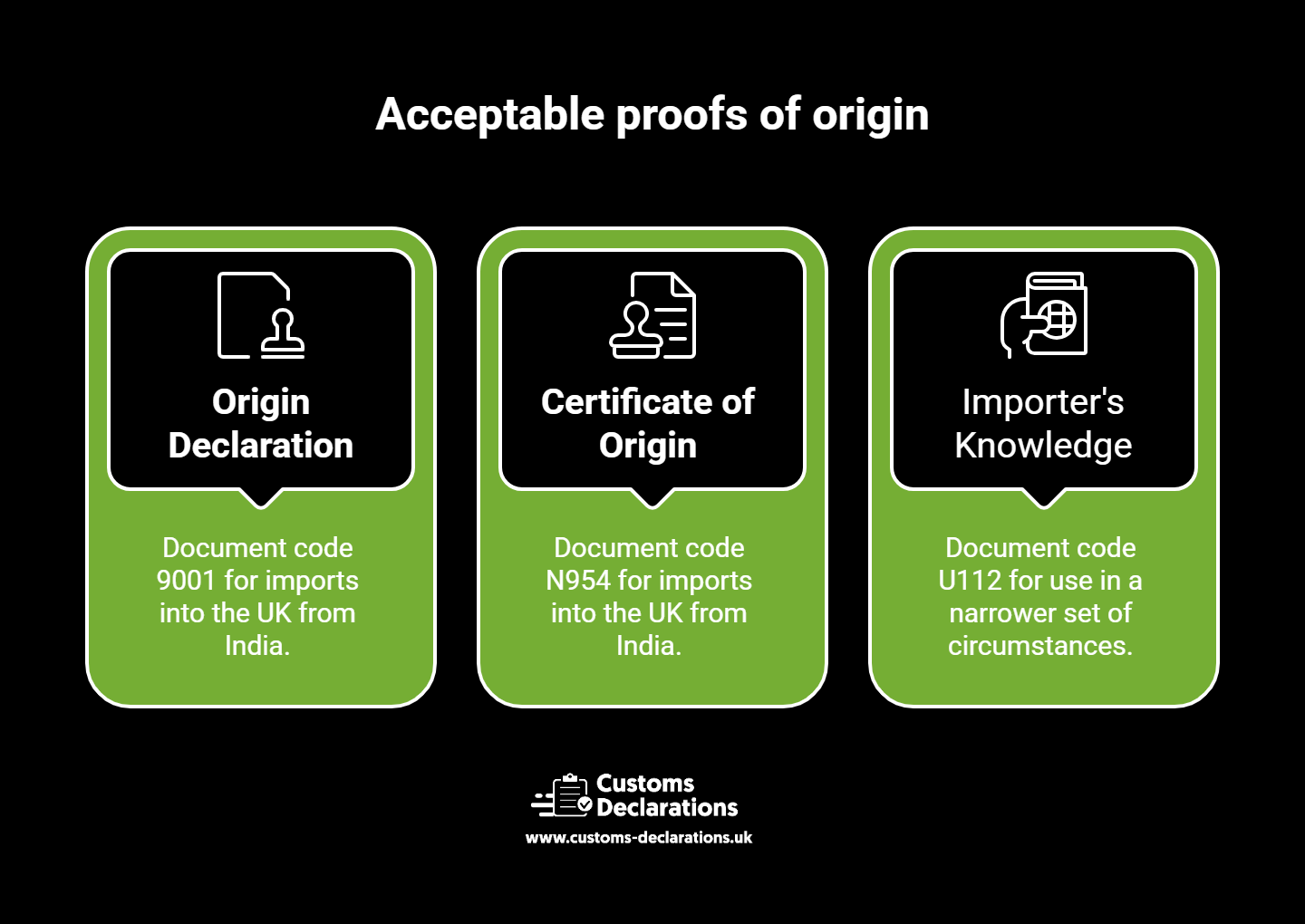
For imports into the UK from India, HMRC’s Trade Tariff has confirmed three acceptable proofs of origin: an Origin Declaration (document code 9001), a Certificate of Origin (document code N954), or, in a narrower set of circumstances, Importer’s Knowledge (document code U112). These reference codes slot into the existing CDS documentary evidence framework — the equivalent of Data Element 2/1 and its Appendix 5A codes that declarants already use for other preferential origin claims.
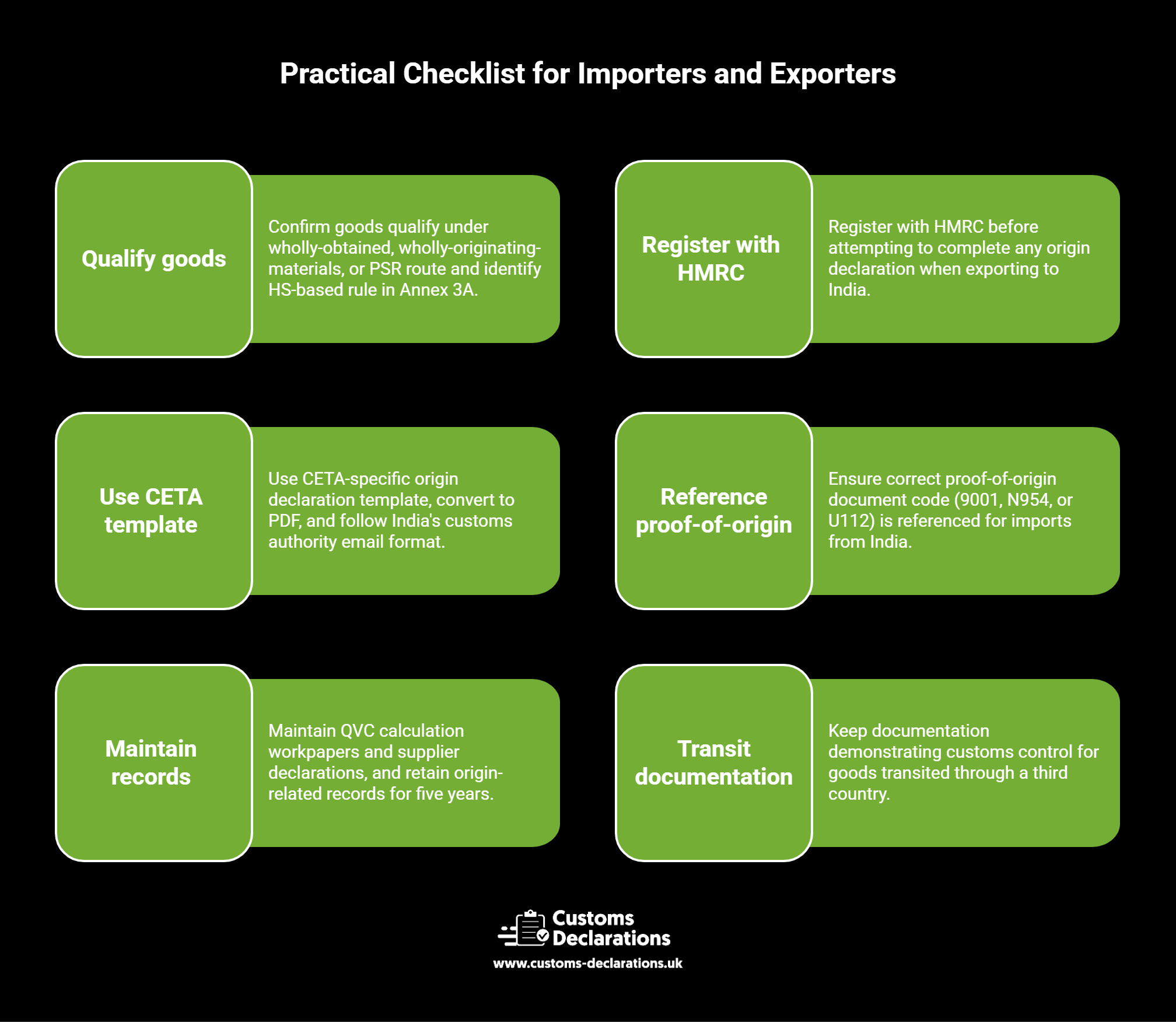
The more consequential change sits on the export side. UK producers and exporters who want to self-certify origin for goods moving to India must register with HMRC before completing any origin declarations under the agreement — this is a precondition, not a formality, and unregistered declarations will be rejected outright. Registration requires the business’s EORI number, trading name, and up to eleven email addresses (a primary address plus up to ten additional ones), and critically, each registered email address can only be linked to one EORI number; reusing an address across multiple EORI registrations will cause India’s authentication system to treat the submission as a duplicate and reject it, leaving the Indian importer unable to claim preference.
Once registered, the process for each shipment follows a defined sequence. The exporter completes an origin declaration using the specific UK-India CETA template — its layout differs from templates used under other UK FTAs — converts it to PDF, and emails it to the Indian importer with India’s customs authority copied in, using a registered email address. The subject line must follow a fixed format (EORI number and declaration date), and the email must contain the origin declaration as the sole attachment; including invoices or other documents in the same email. A successful submission generates an automatic confirmation from Indian customs, including a unique reference number the importer will cite when claiming preference. The origin declaration itself is valid for 12 months from completion and may cover multiple goods within a single shipment.
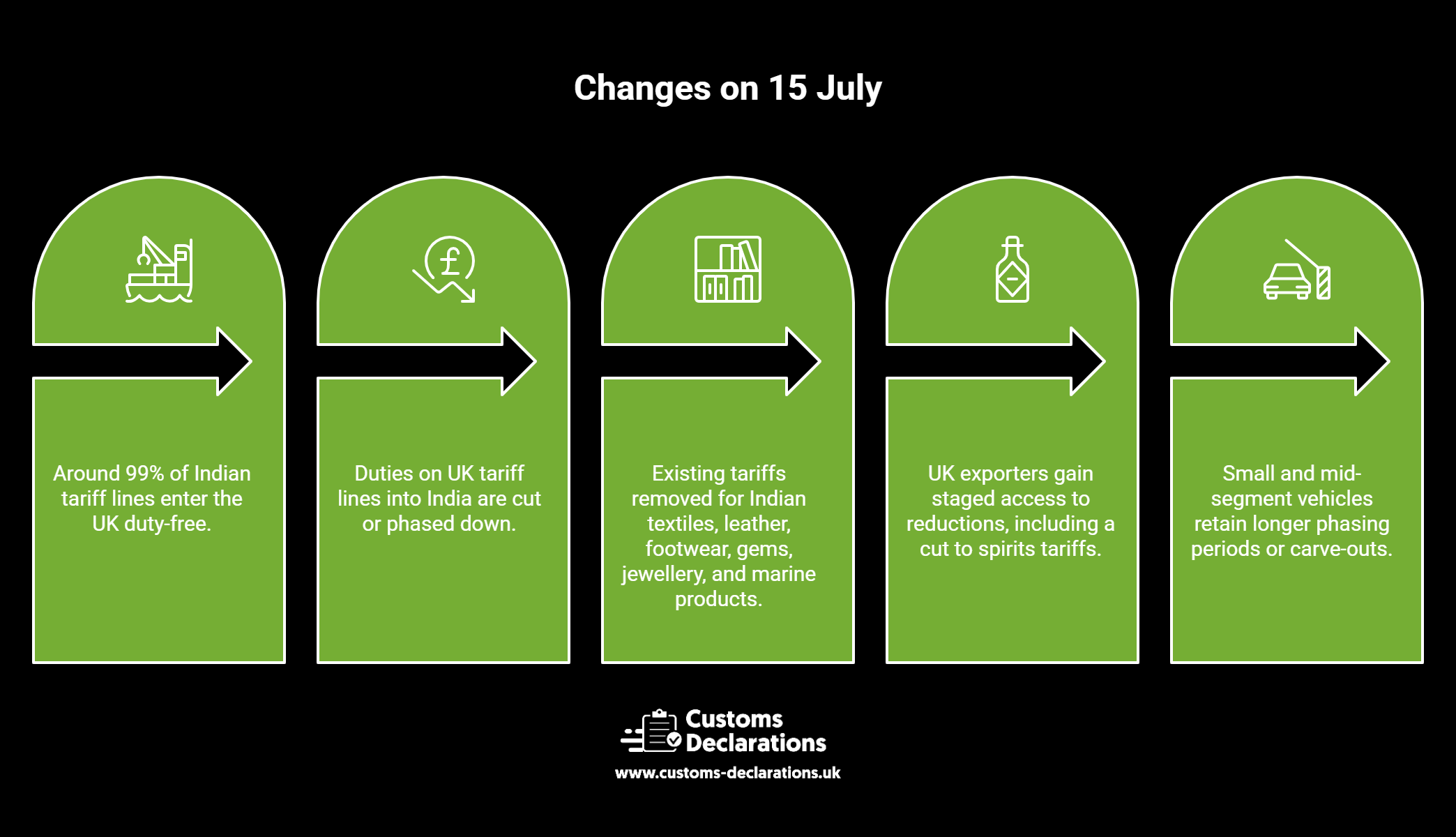
Two further provisions are worth flagging to clients. Goods already in transit or held in bonded storage in India before 15 July can still benefit from preference, provided the origin declaration is dated on or after entry into force — declarations dated earlier will be rejected as referring to an agreement not yet in effect at the time. And where preference isn’t claimed at the point of import, UK exporters’ Indian customers can make a retrospective claim up to a year after importation, provided the goods would have qualified at the time and a copy of the origin declaration can be produced.
Record-keeping runs for a minimum of five years from the date of the origin declaration, covering the declaration itself, invoices, supplier statements, production records, QVC costing workpapers, and transport documentation evidencing the non-alteration rule where goods have transited a third country.